
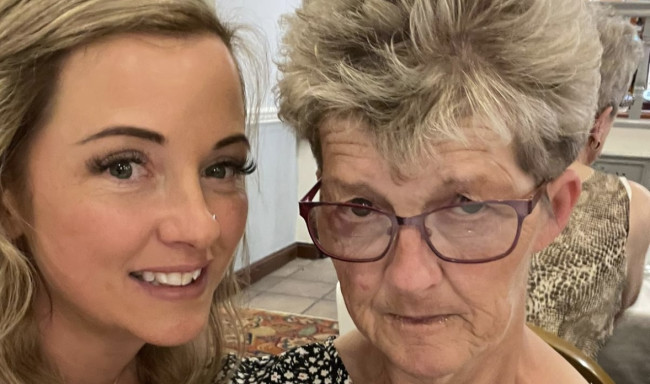
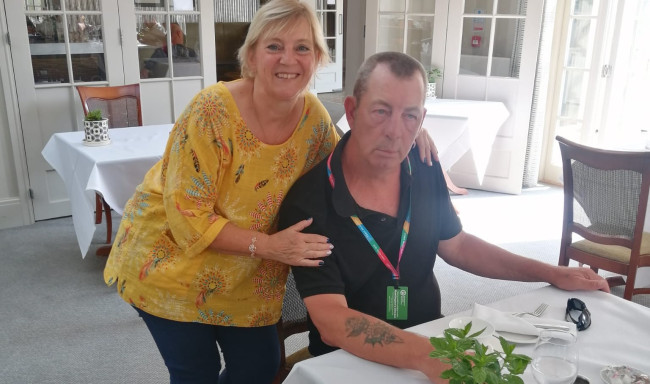
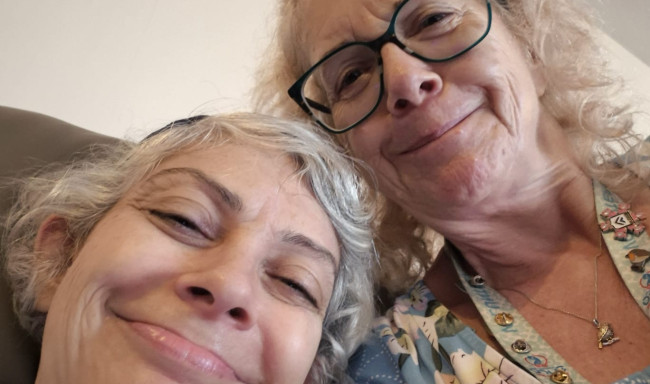
Lisa shares the story of her daughter's life with Juvenile Huntington's disease and her constant fight with services.
I wish professionals would listen to the family first. It's key because you know what works for your loved one and what is going to make their life easier.
Lisa, from near Liverpool sadly lost her daughter Becky to Juvenile Huntington’s disease in 2021. Lisa fought hard to ensure Becky got adequate care but she says that absolutely everything was a battle.
From lack of knowledge and compassions from GPs and Neurologists upon finding out Becky’s status to awful treatment in the mental health unit when she was sectioned to lack of specialist equiptment in the home she was in. All of this amid a continuous battle for funding.
Becky was funny, a bit daft, a lot crazy. She loved life, she never complained and “was the bravest person I've ever known - a real Huntington’s warrior,” says Lisa. Becky was described by her mum as the definition of “Hurry up and wait” If she wanted something, she wanted it now and after her diagnosis, this became more intense.
Seeing Becky deteriorate over the years, both physically and mentally, she never lost her strong-willed bravery and determination to live. She never showed fear, and these are characteristics I've seen and a lot of Huntington’s warriors I've met on this journey.
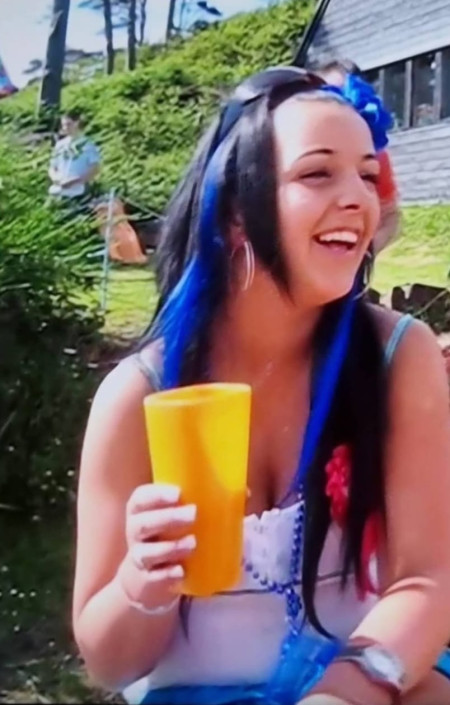
Finding out about Huntington’s disease
Lisa was still yet to speak to Becky about her father’s Huntington’s disease as she found out when she was a toddler and thought she had many years until this could impact her. She recalls thinking, “This happens to people when they're much older. By the time I need to have this discussion there will be a cure.”
That was until, she found out Becky was pregnant.
Becky, had gone off the rails a little bit and but so have a lot of teenagers. So I didn't think anything. I didn't think Huntington's. She came home when she got pregnant. Something about Becky eyes looked different. It just felt like there was something not right, like even the movement of them.
She attended an antenatal class with Becky and the nurse asked about genetic conditions. Lisa thought this was going to be the moment she has to tell Becky, but somehow, she already knew. “Huntington’s disease, and I think I’ve got it,” Lisa recalls Becky saying. "I hadn’t talked to either of them about it ignorantly," Lisa says.
Reflecting on their childhood, she assumed Becky and her brother must have overheard conversations with Becky’s dad, Mark. Although Lisa felt guilty for not realising, she is is also glad that it didn’t taint their family life knowing that it could have impacted Becky at such a young age. “We probably wouldn't have enjoyed the short time that we had together,” she says.
They quickly referred Becky to Genetic Counselling in Liverpool. This was also their first contact with the Huntington's Disease Association. The local Specialist Adviser at that time joined them in the meeting. Both the counsellor and adviser made sure Becky was well and also arranged a meeting with just Lisa to discuss the difficult matter that Becky’s might not be able to look after her Alfie through school.
Bill [Specialist Adviser] told us what to expect and what could and couldn’t happen. Between Bill [Huntington’s Disease Association] and Alder Hey Hospital, they were very very supportive.
The negative in this situation was how Becky and Lisa were told. They arrived at the neurologist's office and the neurologist blasted out the news without any compassion. “I wouldn’t want anyone finding out that way”, Lisa says.
Let down by mental health services
When Alfie was born Lisa started to notice many more changes in Becky’s behaviour. Becky was a friendly person but she suddenly became very very vulnerable. Lisa rented her a house directly opposite them to help with Alfie but she noticed more people coming to the house. She received benefits and people started to take advantage of her.
Things started to get worse. Her behaviour was rapidly changing, she began demanding things and becoming more and more vulnerable. Lisa tried multiple hospital visits to try and get her medications to manage the symptoms but unfortunatly it was too late. She had a psychotic episode and unfortunately was sectioned.
Becky getting sectioned and the way she was treated was the most horrific thing I've ever gone through.
Becky, at just 20 years old, with an unmedicated, neurological condition was put in a padded plain room that Lisa descried as being like a pison cell, with no pillow or duvet, just blankets, no other females on the ward and was deprived of having a cigarettes when she needed them which her mum begged for them to let her have as she knew it was one of her fixations and would calm her down.
They had just moved her from one secure unit to another so she could be closer to me so I could do her morning personal care. She was frightened and wanted a cigarette. They said she couldn’t because it was after 8pm and I said, but I know Becky and her symptoms and this is going to escalate and she will be restrained. And unfortunately, that happened then, and a lot when she was in there.
When Lisa asked why she couldn’t have a duvet they said it was a fire risk. So Lisa went to the local fire station, got a fire retardant pillow and quilt and marched back to the secure unit and demanded Becky have it. She took that in alongside a poster her friend had made with a compilation of photographs from their holidays.
Becky’s friend, an Emergency Nurse Practitioner, raised all the issues with the Safeguarding Network as she believe it was not right how Becky was being treated.
You've got violent people but that's not Becky. Becky's got a degenerative brain disease which will actually reduce her life. And I felt like they were treating her like she'd done something wrong. I battled and battled with them.
Fighting for better understanding
Becky was moved to Kavanagh Place care home. The care home actually tried to help get Becky out of the secure unit and into the home sooner where they would continue to her medication and treatment but this was refused by the mental health teams.
Eventually she arrived and although her carers did an amazing job and she was surrounded by people she came to see as family, Lisa still had to fight for people to understand the needs of Huntington’s. “It's never easy. It's always a fight”, Lisa says.
She couldn’t walk without wobbling and falling and it was six months before she got a wheelchair. I had to get a social worker involved. This is and will forever be an issue because education, listening to people out now is the only way I see this improving.
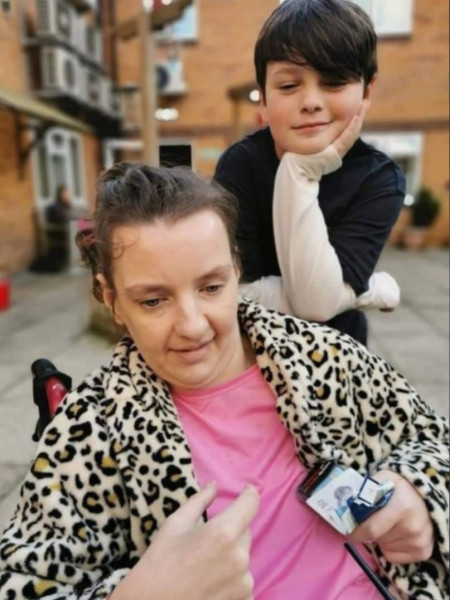
Support from Huntington’s Disease Association
Their first intervention with one of the Huntington’s Disease Association Specialist Advisers was at the genetic counselling appointments. The Huntington’s Disease Association also supported Lisa in both getting the right benefits for Becky. Specialist Adviser, Theresa helped her to appeal the low financial support she got. She also helped advocate for her in court when they were dealing with Alfie’s future care. Theresa explained to them about how Huntington’s impacts a person and how they needed to change the ways that they spoke to her. Lisa got further support especially from her local branch which has supported her emotionally and financially when needing specialist items for Becky.
Six months after Alfie was born I contacted the Huntington's Disease Association. And from that moment on, it was life-changing. I no longer felt alone. I no longer felt useless. I met my new family at the Merseyside branch of the Huntington's Disease Association. And 16 years later, they are still my family. Alfie is now also attending meetings and I know they'll support him on his journey.
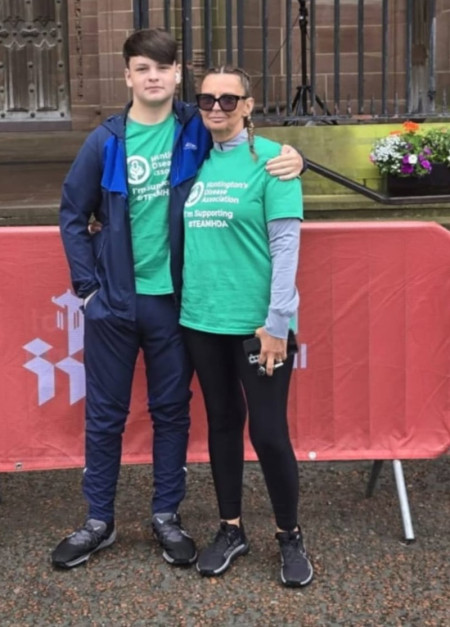
What do you wish people knew about Huntington’s disease
Huntington’s can differ from person to person and will manifest differently. But there are some basic things people can learn. Listen, listen to family, listen to the professionals who do know, it's just not enough to say, yeah, we've heard of it - you need to understand it.
Huntington's Disease Awareness Month 2026
This year's theme is Behind the Gene - The invisible challenges and untold stories of Huntington’s disease.
This May, we are showing the many faces and many lives behind Huntington's disease and what they wish people knew. Too often, people affected by Huntington's disease find themselves educating the public and healthcare professionals about their condition.
As part of this campaign, our aim is to educate more professionals about Huntington's disease. To do this we have created a new factsheet that is being distributed to GPs and health care settings across England and Wales.