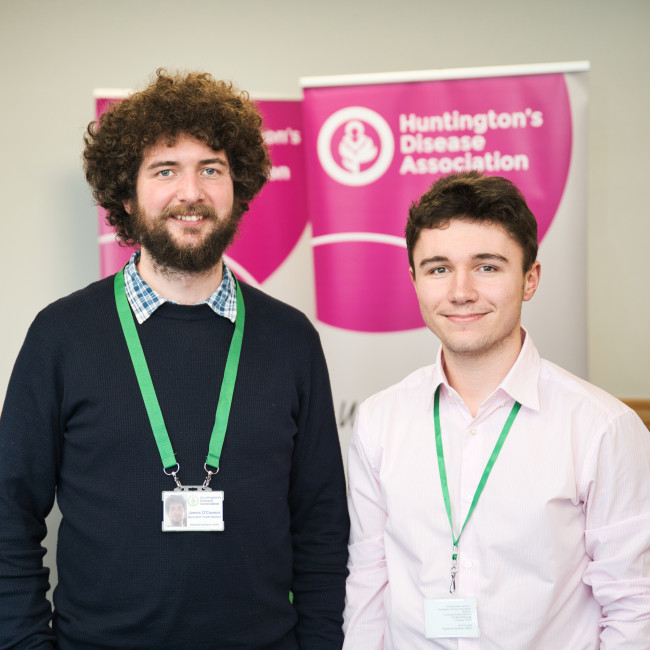
New guide for healthcare professionals about NHS Continuing Healthcare (CHC) Assessments
Campaigning, Professionals
Helpline:

We know that navigating health and social care systems can feel overwhelming, especially as Huntington’s disease progresses. This guide is here to help you understand your rights, your options, and where you can turn for support.
This page explains NHS Continuing Healthcare specifically for people affected by Huntington’s disease. It covers:
What NHS Continuing Healthcare is
Who may be eligible
How the assessment process works
Where to get help, advice and advocacy
If you or someone you care for has Huntington’s disease, you may have complex health and care needs that change over time. NHS Continuing Healthcare (CHC) is a package of care that can be arranged and fully funded by the NHS for people with long-term, complex health needs.
Continuing Healthcare is based on your care needs, not your diagnosis, so people living with Huntington’s disease may be eligible because the condition can affect mobility, thinking, communication, behaviour and emotional wellbeing.
We have developed a guide to support healthcare professionals in carrying out accurate NHS Continuing Healthcare assessments for people with Huntington's disease.
NHS Continuing Healthcare is free care funded by the NHS for adults with long-term and complex health needs. If you are eligible, it can cover personal care, including help with washing, dressing and eating, nursing care, specialist equipment or support with cognition, behaviour or mental health.
CHC can be provided in your own home, in supported living, or in a care or nursing home. The care is fully funded by the NHS, so you should not have to pay for these services.
Continuing Healthcare is for adults whose care needs are complex, intense and unpredictable. Eligibility depends on what care you need, not your condition, although Huntington’s disease often involves multiple types of need, such as:
moving safely or managing falls
swallowing and nutrition support
communication difficulties
changes in thinking, behaviour or mood
Your needs are carefully assessed, and eligibility can change if your condition or care needs progress.
The assessment process usually starts with a checklist completed by a healthcare professional. This decides whether you should have a full multidisciplinary assessment. If your health is deteriorating quickly or you are near the end of life, the NHS may fast-track your assessment so care can start more quickly.
A team of health and social care professionals (an MDT) looks at your needs in areas including:
breathing and oxygen support
nutrition and eating
continence
skin care
mobility
communication
psychological and emotional needs
cognition and understanding
behaviour
medication
any other significant needs
Each area is rated from no need to priority need. People with Huntington’s disease often have needs in multiple areas, which can make them eligible for Continuing Healthcare. You should be given a copy of the decision and clear reasons for it.
The CHC process can be confusing and stressful, especially for families affected by Huntington’s disease.
You can get free, independent advice from Beacon, a specialist Continuing Healthcare advice service - Helpline: 0345 548 0300
You can also contact us for guidance, support, and advocacy throughout the assessment and care process.
All information is correct at time of publication - May 2026

Campaigning, Professionals
Awareness, Campaigning, Professionals
Advice, Carers, Support