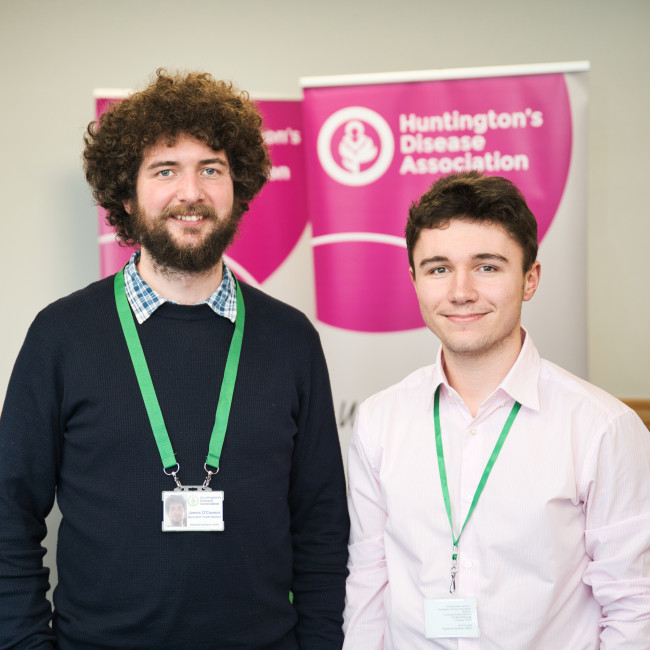




Chloe talks about how the youth service supported her in her employment and how it can support you.
People may assume that the youth service only speaks with educational settings but that isn’t the case.
Chloe from Cambridgeshire tested negative for Huntington's disease in 2022. She had lived with her at-risk status for about four or five years. She found this out whilst at University during her professional healthcare degree.
The at-risk status really impacted Chloe’s mental health as she struggled with the unknown and was consumed by the thoughts on a daily basis. Over time she began to think how it would impact her career, progression within her career, and if she would have to retire early.
When Chloe decided that she was ready to go through genetic testing, she had started a new job. Although nervous that they wouldn’t understand her needs like her old job, they were really supportive and let her take some time off work after her result.
The youth service spoke with my supervisor just to explain what I was going through. Explaining that I was at risk of Huntington's and how I might be managing after I attended like genetic counselling appointments and just how they could support me at work, which was really, really helpful.
Chloe, although negative, still feels lost and struggles with decision-making due to years of believing that her future would be different. Things such as appraisals and talking about career paths can become overwhelming for her. But she is able to lean on her Youth Worker whenever she needs advice.
I was very fortunate to be under the care of the youth engagement service. One thing that I would say to young people impacted by Huntington's disease. There are so many experiences out there and just because you are impacted by Huntington's disease doesn't mean that you're not worthy of taking those in whatever you want to do, employment-wise or any of the life decisions that you make at this point in your life.
Supporting young people in the workplace is something HDYES can help with
The Huntington's Disease Association Youth Engagement Service doesn’t just support young people in schools. They can also help by speaking to colleges, universities or your workplace. By doing this, they help teachers, lecturers and employers understand what Huntington’s disease is, what life might be like at home, and what they might be going through in terms of being a young carer, being at risk or going through genetic testing.
Having HDYES available to speak with employers has been really reassuring for me! Making career choices when being at risk of Huntington’s disease felt overwhelming sometimes, and so knowing that a youth worker could explain to colleagues how what you are experiencing outside of work can impact you when in work and what support you might need is really helpful.