
Rebecca shares her journey and why she has chosen not to take the genetic test for Huntington's disease.
Being able to attend the Huntington’s Disease Association young adults events has been really helpful. I have had the chance to speak to people who have and have not tested, which has served as a good reminder that while other people may be ready to test, I’m not ready and that is okay.
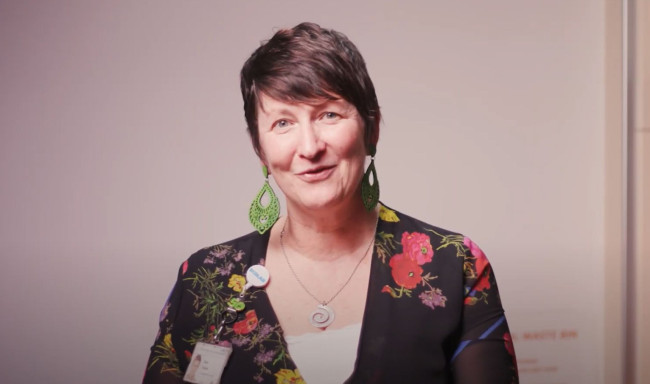
Rebecca is a 28 year old primary school teacher at risk of Huntington’s disease. She is a huge advocate for Huntington’s disease and was part of the charity’s HD Youth Voice programme which enabled her to be involved in projects and help shape the future of the youth service for people like her. She is now a Huntington’s Disease Association Ambassador.
Rebecca discovered Huntington’s disease was in her family around the age of 13. “I have a vague memory of my mum and dad talking about it with me and my brothers round the table at tea time, saying about how one day my dad might have to stop driving. Around this time the Huntington’s Disease Association came to our house to meet our whole family and explain it too.” Rebecca says.
Rebecca, her mum and her brothers provided care for her dad before he moved into a care home at the beginning of 2018 before he passed away in 2019. Her three younger brothers are also at risk of inheriting Huntington’s disease. She has chosen not to find out if she carries the faulty gene.
It was a really confusing time. Hearing that your parent is ill and watching them deteriorate over time, as well as finding out that there is a 50% chance that it could happen to you too, is quite a lot to comprehend.
Rebecca has utilised the Huntington’s Disease Association services since she was a teenager. She has been supported by the charity’s youth workers through school and university. Now that she has moved from the youth engagement service into the young adults support, she has benefited from attending online and in person events with others who are also thinking about testing and starting a family. Rebecca says she also accessed information around testing from the Huntington’s Disease Association website, as well as receiving information booklets.
I have received an incredible amount of support from the charity, both with my Huntington’s journey and with testing. Having been supported by the charity as a teenager, there has always been a youth worker to speak to through all the stages of Huntington’s that we experienced with my dad. What has been really important and helpful is that just because my dad is no longer here, does not mean the support from the charity has stopped.
The 50:50 risk and the decisions around testing
Rebecca always said that she would want to know her Huntington’s status as soon as she turned 18. “In a bit of a odd way, being old enough to test put me off from choosing to do it.” she says.
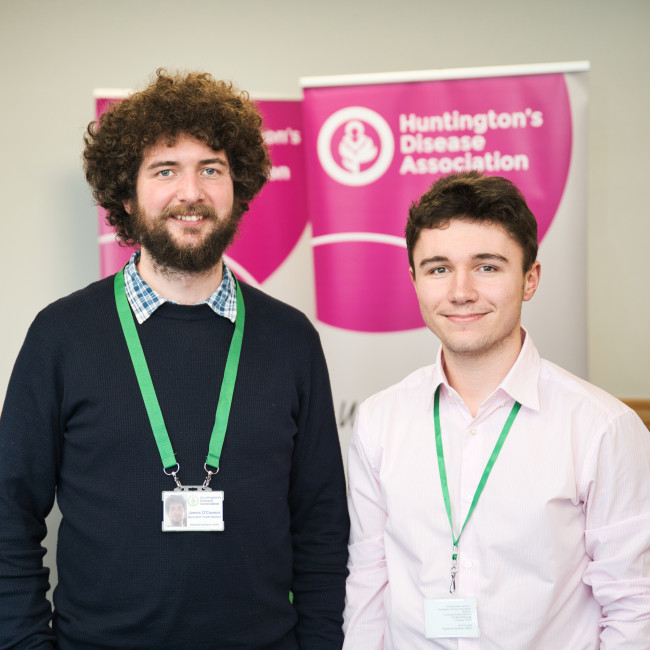
Testing and family planning became a key topic of conversation with others at risk in the young adults group. She had spoken with James from the Youth Engagement Service many times about testing. They had also spoken about starting a family where she was reassured that this was possible without finding out, through PGT IVF. Whether she wanted to know or not was still at the forefront of her mind. “James reassured me that just because I had plans to meet with the counsellor, it did not mean that I had to have the test, but that it could help me understand what to do next”, Rebecca says.
Rebecca had two genetic counsellors who came to her house and met with both her and her partner. After a lot of time to think between sessions, one key thing her counsellor said helped to make up her mind.
My Genetic Counsellor said “once you know, you can’t unknow” and that really stuck with me. Although not knowing can be terrifying, to me the thought of knowing is actually more terrifying in many ways.
What advice would you give to others who are torn between testing and not testing?
- Talk to others about how you are feeling about testing, but also do not let others persuade you into doing it if you do not think you are fully ready. Someone who is not living with the 50:50 risk might say what they would do if it was them, but they are not the person who has experienced all that you have, so you have to make the choice for yourself.
- Talk to anyone from the Huntington’s Disease Association! Everyone I have spoken to from the charity is extremely supportive.
- Give yourself time to work out whether you should test or not. It does not need to be an immediate decision. One day you might think it is what you should do, and another day you might think you do not want to know. Consider what might be the cause of why you are thinking of testing.